

Place: Expo 2025 Osaka, Kansai – Gallery EAST
Period: April 13, 2025 – April 20, 2025
This exhibition, titled “Ikenobo Ikebana Exhibition – TRANSITION –,” is a unique “ikebana exhibition unfolding in space-time” where multiple layers of “transition” and “change” overlap. It explores the 1,400-year history of ikebana and the philosophy of “floral life” through a sensory experience that integrates technology and digital expression.
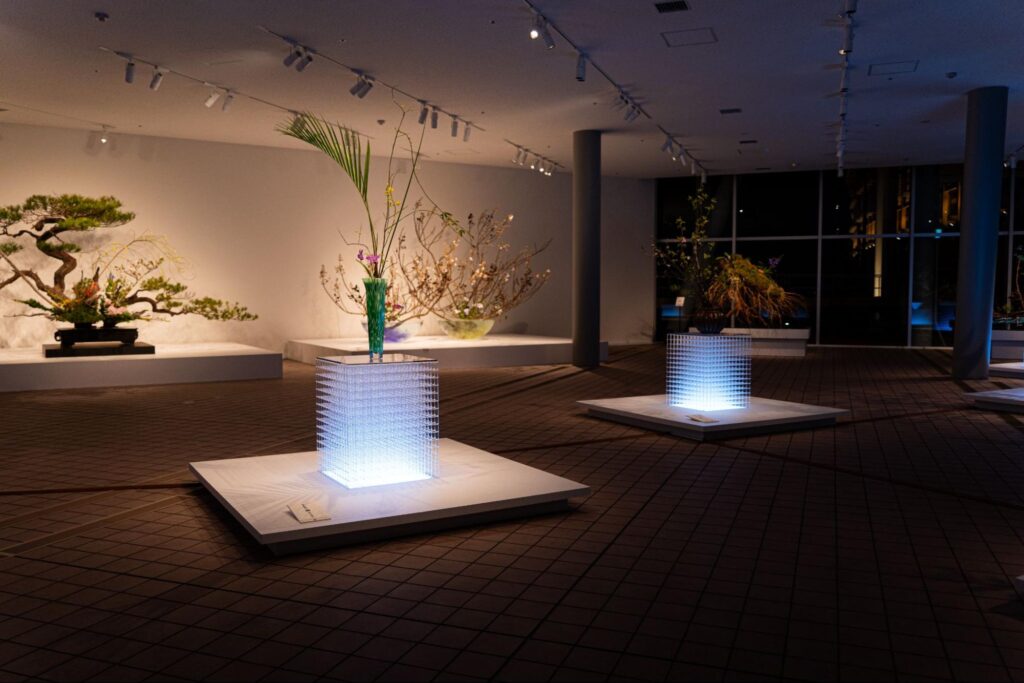
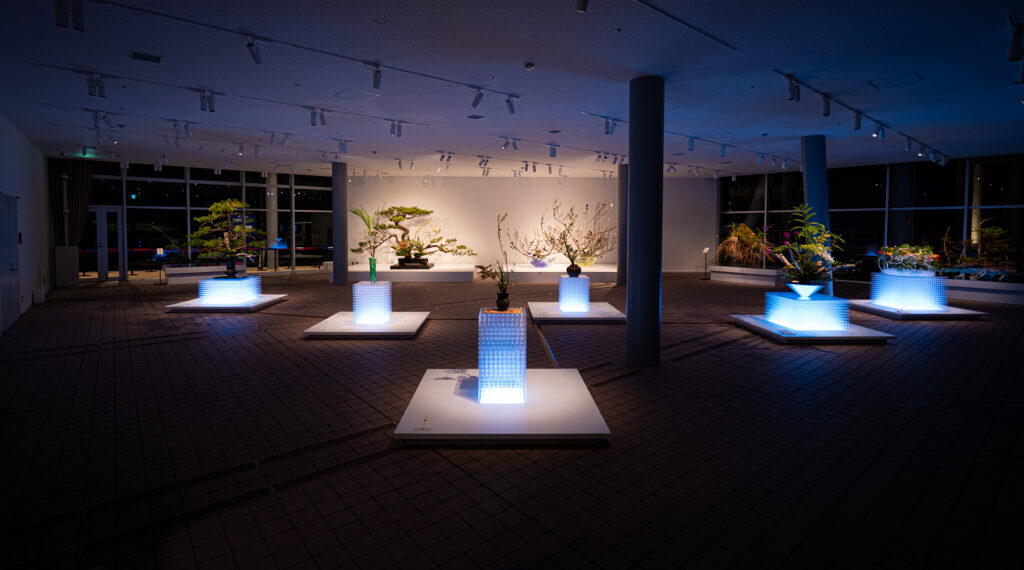
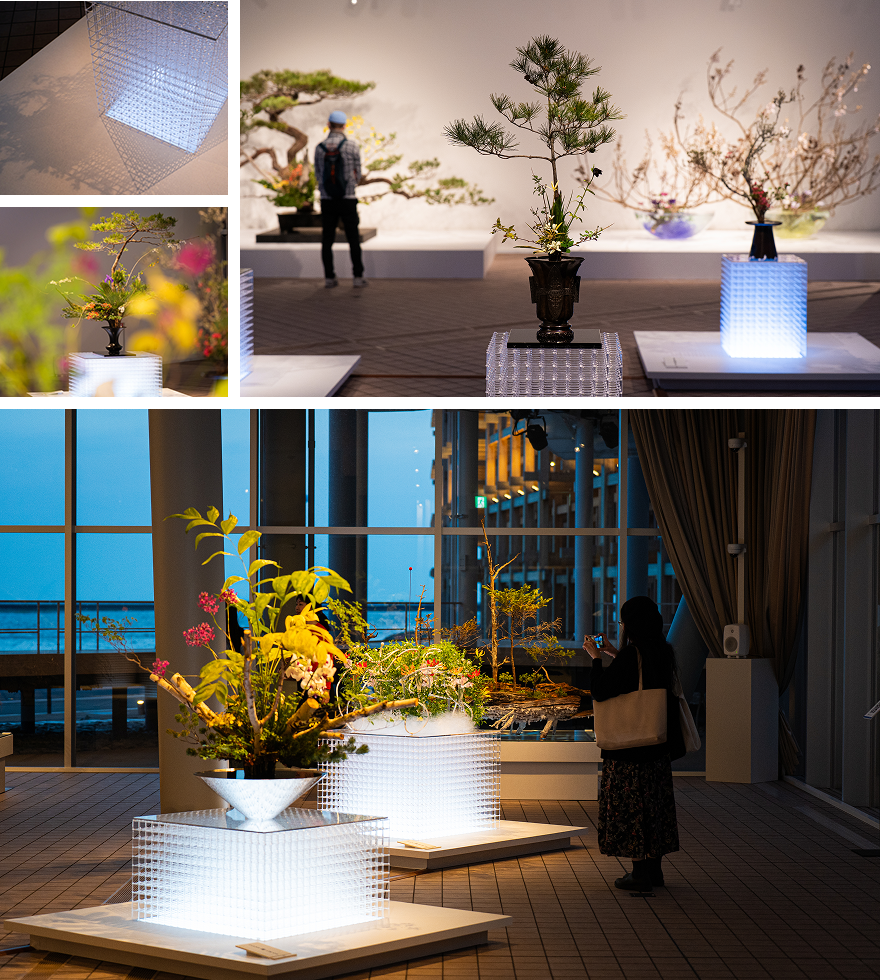
To more richly draw out the dual nature of ikebana—as both a “temporal art” and a “spatial art” where life itself transitions—we deliberately removed the rear “walls” traditionally considered essential for such exhibitions. Instead, we created a free-flowing space where natural light, dynamic lighting, and the biological changes of the flowers themselves intersect and overlap.
As visitors wander through the space, they witness the ever-changing dialogue between light and flowers from their own unique perspectives, experiencing ikebana as a fleeting, non-reproducible moment.
While we respect the historical rule of “frontality” (shomen-sei) cherished in classical ikebana by establishing primary viewpoints, the layout is also designed to encourage observation from multiple angles. This achieves a new form of “ikebana exhibition” that remains rooted in tradition while inviting visitors to engage more actively with the art.
Collaborative Ikebana Installation: “Cycle of Life”
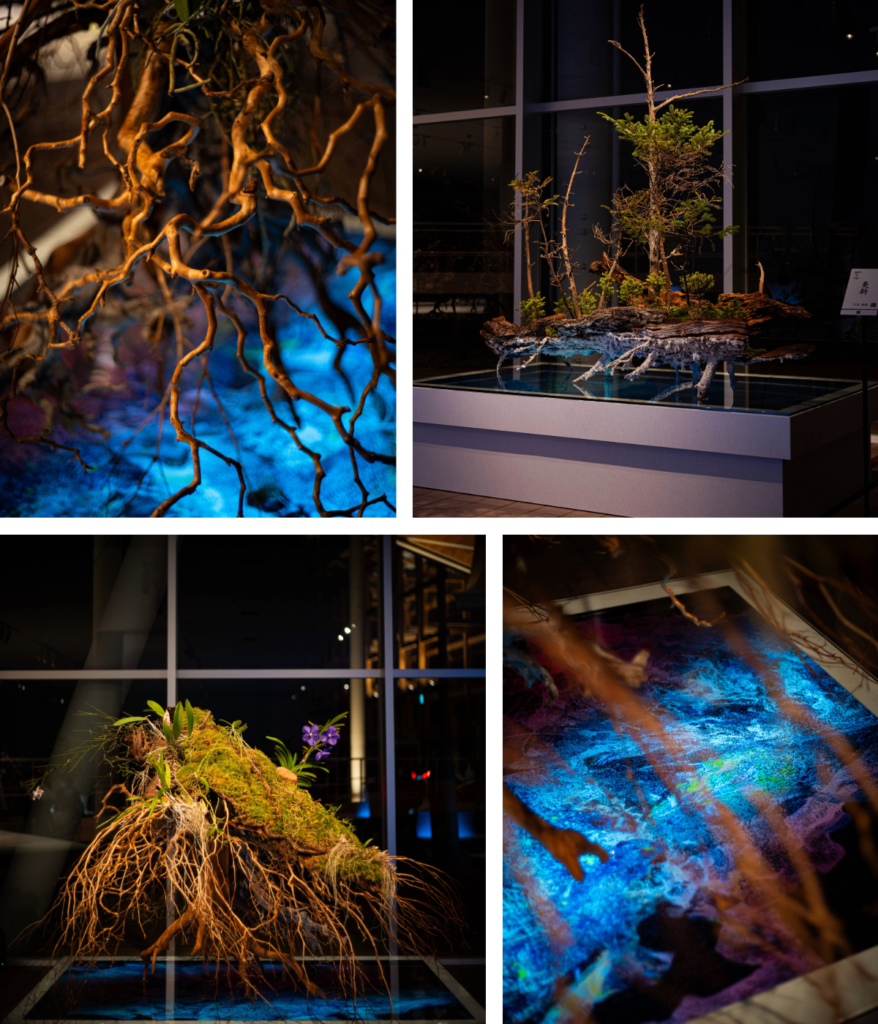
Created in collaboration with enigma inc., this three-part ikebana installation explores the profound truth of the “reincarnation of life.” High-definition digital landscapes, rendered from 3D scans, resonate with physical ikebana at the boundary between the real and the virtual, depicting the eternal cycle of existence.
Rock: Emergence
Rocks that endure eternal time and wear the mantle of silence symbolize the immovable “earth”—the foundation that gently yet powerfully embraces the beginning of all life.
Roots: Evolution
Roots that spread freely to support life from the dark underground represent a quiet strength. They tell the story of the constant evolution of life, connected through unseen bonds and forever transforming.
Trees: Rebirth
“Nurse logs” (fallen trees) where new sprouts emerge to continue the cycle of life represent the process of forest renewal. Amidst the changing seasons, they embody a never-ending cycle of rebirth and a hope for tomorrow that never fades.
Key Points
Concept
Creating an ikebana exhibition that expands space and time through countless transitions and transformations.
This exhibition aims to unify the dual nature of ikebana—as both a “temporal art” and a “spatial art”—into a single, immersive “exhibition as an experience.”
By layering the ephemeral beauty of floral life, the historical evolution of ikebana forms, the ever-changing natural light filtering through the glass-walled space, and technology-controlled dynamic elements, we create a non-reproducible experience that is unique to every single moment.
Experience Design
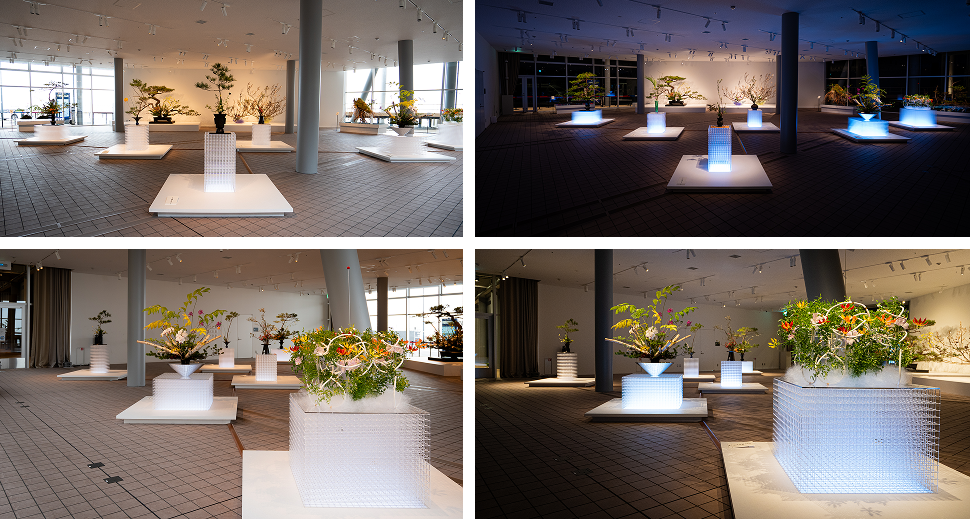
We deliberately removed the rear “walls” that have traditionally been considered essential for ikebana exhibitions. Instead, we created a free-flowing space where shifting natural light, dynamic staged lighting, and the biological changes of the flowers themselves intersect.
While respecting the historical rule of “frontality” (shomen-sei), our layout allows for observation from multiple directions. This design encouraged the ikebana artists themselves to explore compositional techniques that go beyond conventional frameworks.
To design the optimal layout, we developed a proprietary simulator using Unreal Engine. This allowed us to precisely analyze the trajectory of sunlight, the flow of visitors’ lines of sight, and the textures of the materials used in the space.
Sustainability & Universal Design
In traditional ikebana exhibitions, it has been common practice to construct temporary wooden walls and fixtures for each event, only to discard them once the exhibition ends.
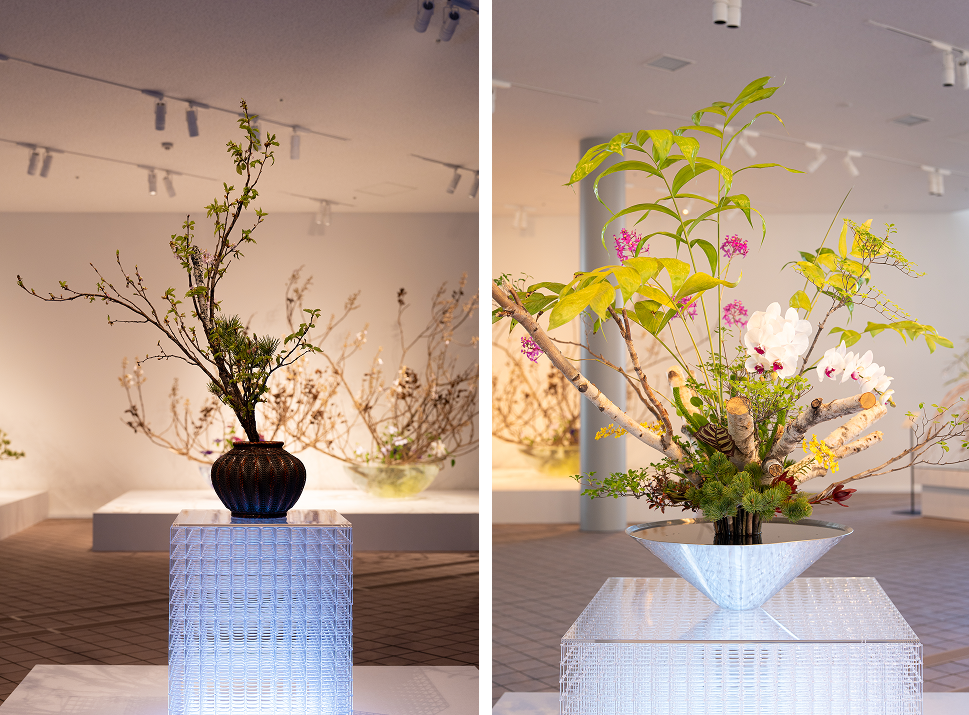
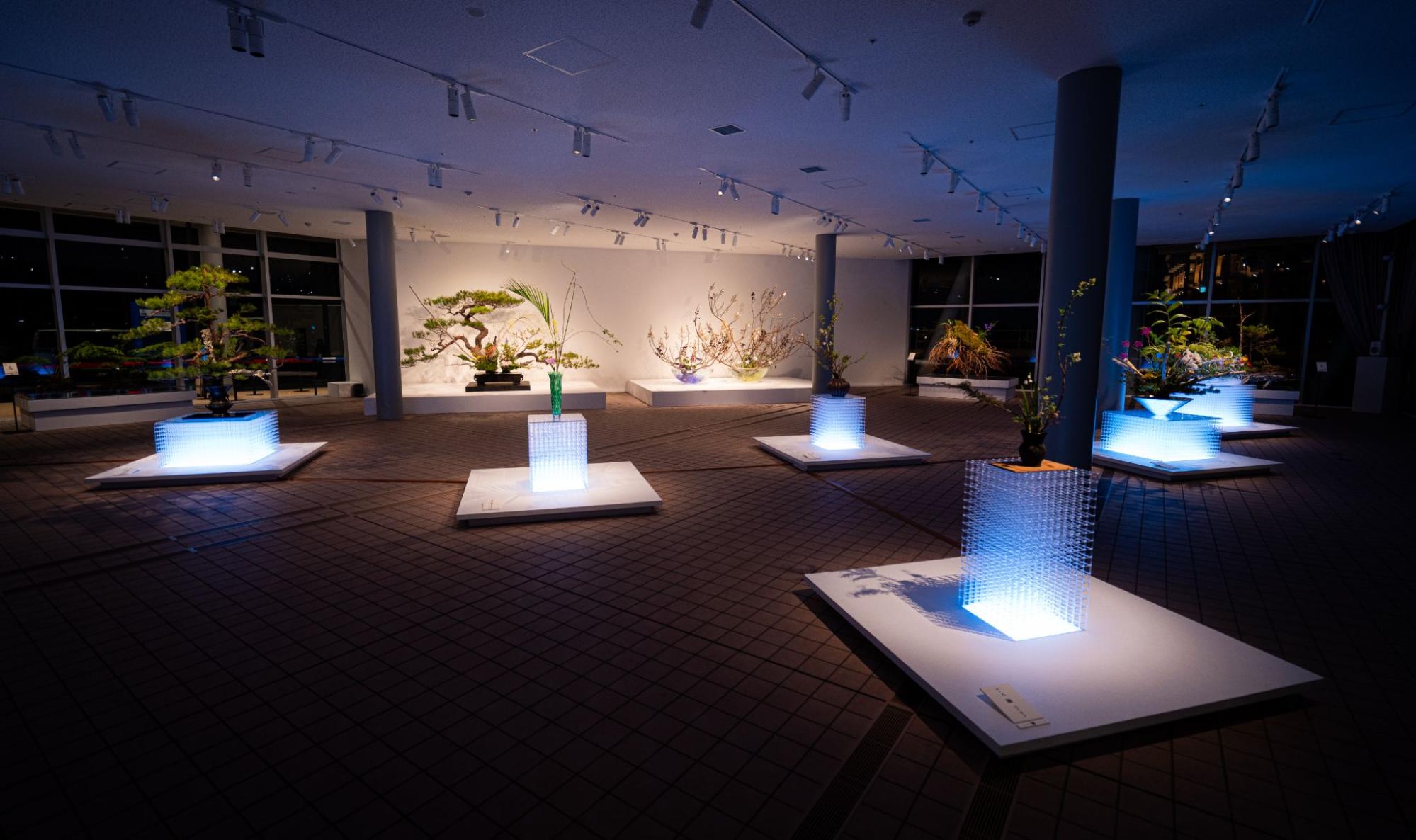
In this project, we have minimized physical elements and introduced a reusable fixture system. The pedestals for classical ikebana are 3D-printed using recyclable resin; their design allows for easy disassembly, transport, and reinstallation, significantly reducing material consumption and waste.
Furthermore, we have achieved a barrier-free environment by ensuring ample space between all exhibits and eliminating any floor-level differences. This resulting exhibition space achieves a high-level balance between sustainability and inclusive design.